
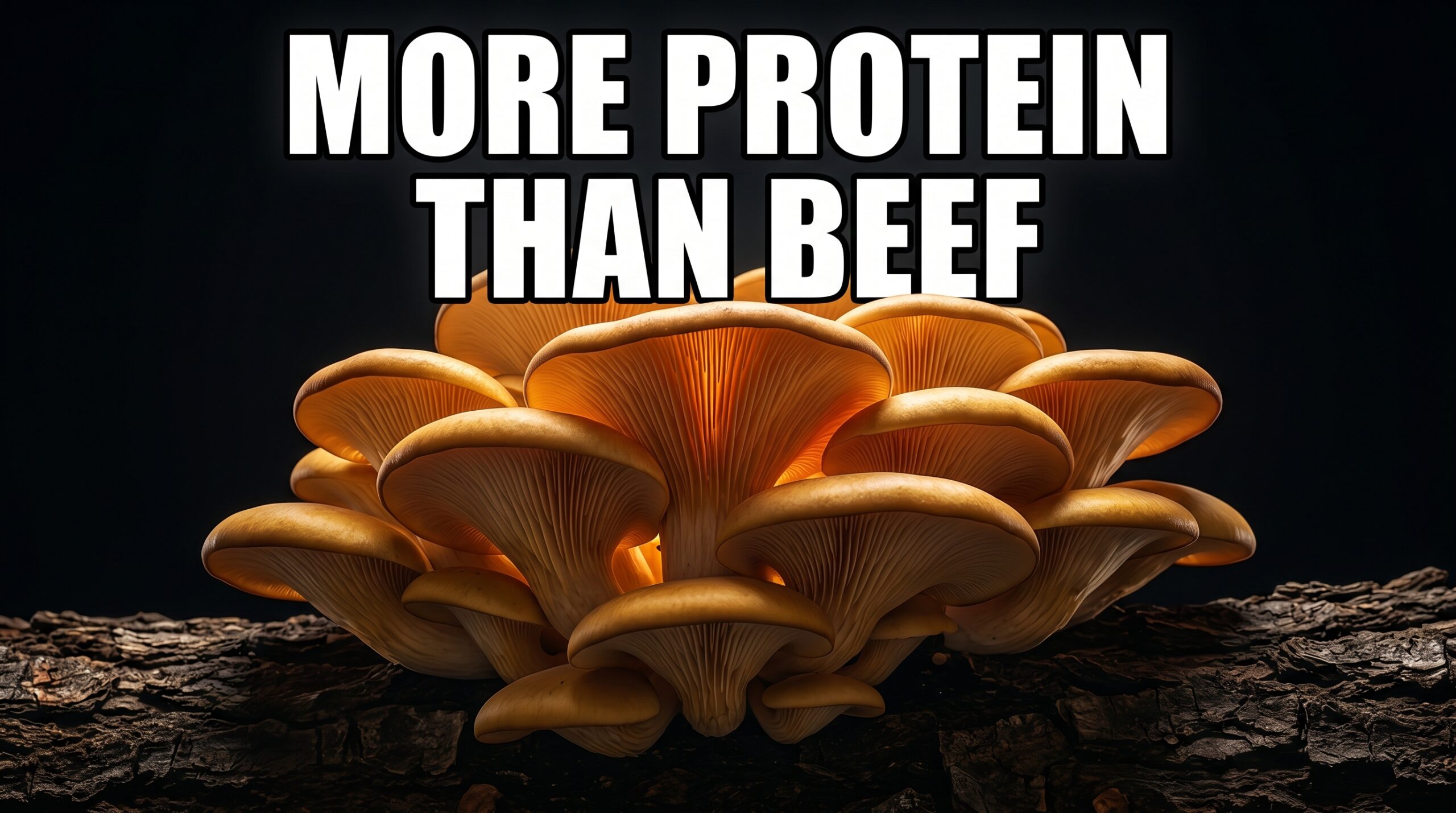
Most people have no idea that a shaded corner of their backyard can produce more usable protein than a bag of mushroom capsules — and keep producing it for the next five to ten years. The eight mushrooms in this guide are chosen for two things: genuinely low-maintenance cultivation and protein content by dry weight that places them in the same range as beef. According to research published in the International Journal of Microbiology, edible mushrooms are among the richest non-animal sources of protein, complete amino acids, B vitamins, and bioactive compounds including beta-glucans and ergothioneine — nutrients that are largely degraded during the drying and processing required to make commercial supplements. [1]
Every mushroom on this list was assessed against a simple rule: if it regularly fails for beginner growers, it does not belong here. Lion’s Mane, Maitake, and Chicken of the Woods were excluded on that basis. What remains are eight species that any backyard gardener can establish in a single afternoon, with yields that continue for years.
What the Supplement Label Does Not Tell You
The global mushroom supplement industry sells dried, processed extracts that have undergone significant nutrient loss before they reach the consumer. Heat-sensitive B vitamins and ergothioneine — a sulfur-containing amino acid antioxidant that has attracted substantial attention in longevity research — are particularly vulnerable to processing. A 2012 review published in Biochimica et Biophysica Acta — Molecular Basis of Disease identified ergothioneine as a compound with remarkable cytoprotective and antioxidant properties, noting its accumulation in human tissues via a dedicated transporter (OCTN1), which underscores its biological relevance. [2]
Fresh mushrooms compare to beef favorably on dry-weight protein: beef runs approximately 25–26% protein by dry weight, while several mushrooms on this list reach 20–33%. Beta-glucans — the immune-modulating polysaccharides found in mushroom cell walls — survive processing better than other compounds, but the full nutritional picture of a freshly harvested mushroom cannot be replicated in a capsule. A peer-reviewed review in Medicina (Kaunas) confirmed that beta-glucans from fungi exert significant immunostimulatory effects through macrophage and natural killer cell activation. [3]
The 8 Easiest Backyard Mushrooms, Ranked by Beginner-Friendliness
1. Wine Cap (Stropharia rugosoannulata)
Wine Cap earns the top spot because no other edible mushroom sets up with less effort. Spread spawn through a hardwood wood chip bed, water it in once, and the mycelium does everything else. Protein content runs 17–21% by dry weight. A single inoculation produces fat, portobello-sized mushrooms every spring through fall for five to ten years. Hardwood chips are the one non-negotiable — pine and cedar are too acidic. Many US and Canadian gardeners source chips free through ChipDrop. First harvest: 6–12 months.
2. Pearl Oyster (Pleurotus ostreatus)
Pearl Oyster runs 20–30% protein by dry weight with a complete amino acid profile — all essential amino acids included, which is uncommon in plant-based proteins. [1] It also delivers iron and beta-glucans linked to immune function. [3] Setup is straightforward: inoculate a straw log or bale with spawn, place in a sheltered shady spot, and in the UK, Ireland, Pacific Northwest, and Canada it will fruit almost unaided from spring through late fall. Straw setups yield two to three large flushes before the substrate needs refreshing. On hardwood logs, production continues for two to four years.
3. Pink Oyster (Pleurotus djamor)
Pink Oyster is the fastest-fruiting mushroom on this list. In warm conditions it goes from inoculation to first harvest in two to three weeks. Protein content sits at approximately 23–25% dry weight. It is strictly a warm-climate species — fruiting temperatures of 65–85°F make it ideal for growers in the southern United States, Australia, and the Mediterranean. In colder regions, treat it as a summer-only crop from June through August. Setup is identical to Pearl Oyster: straw log, shaded spot, no drilling required.
4. King Oyster (Pleurotus eryngii)
King Oyster carries the highest protein content on this list at 25–33% dry weight, alongside a dense, firm stem with virtually no hollow center — a texture that holds through roasting, braising, and high-heat searing in ways most other mushrooms cannot. It is grown in a buried substrate block of hardwood sawdust and bran placed partway into a shaded garden bed. Fruiting occurs in spring and fall at temperatures between 45–65°F, and the same block produces flushes for two to three years. Expect three to five months from inoculation to first outdoor flush.
5. Shiitake (Lentinula edodes)
Shiitake is the most established beginner log mushroom in the world for good reason: it is forgiving, reliable, and a single oak log will produce two to three times per year for five to eight years. Protein runs 17–23% dry weight. It also contains lentinan — a beta-1,3-glucan with documented immunostimulatory and anti-inflammatory activity reviewed in the European Journal of Medical Research, where lentinan was identified as an approved adjunct to chemotherapy in China and Japan. [4] Log-grown shiitake develops slower and concentrates flavor in a way the compressed-sawdust store product cannot match. When flushes slow, a 12–24-hour cold-water soak reliably triggers new pins.
6. Nameko (Pholiota nameko)
Standard in Japanese cooking but almost completely absent from Western backyard cultivation, Nameko is a silky, amber-gold mushroom with a natural gel coating that gives it a uniquely smooth texture when cooked. Protein runs 17–20% dry weight. It is notably high in ergothioneine — the same antioxidant compound identified by Cheah and Halliwell as a potential physiological cytoprotectant with significant relevance to aging and disease. [2] Cultivation follows the same plug-spawn, wax-and-stack method as shiitake, but Nameko prefers cooler, moister conditions — making it an outstanding choice for UK, Irish, northern European, and Canadian growers. A single log yields multiple flushes per year for three to five years.
7. Pioppino / Black Poplar (Agrocybe aegerita)
Known as piopparello in southern Italy, Pioppino is a serious culinary mushroom favored by professional chefs for its firm stem texture that holds structure through braises and risottos. Protein by dry weight is approximately 18–22%, with meaningful concentrations of polyphenols that support gut microbiome health and help reduce oxidative stress. [1] The growing method is distinct: bury short, foot-long sections of inoculated hardwood log approximately 80% underground, leaving the top inch or two exposed. That soil contact is what triggers fruiting. Clusters emerge spring and fall for three to four years.
8. Enoki (Flammulina velutipes)
Enoki fills a gap no other mushroom on this list can: it fruits at 35–55°F, producing when every other outdoor species has gone dormant for winter. Wild outdoor Enoki produces golden-brown clusters on hardwood logs — a far cry from the bleached white bundles grown in total darkness for supermarkets. Protein runs 21–23% dry weight, and Enoki leads among edible mushrooms for ergothioneine concentration. [2] Oak, elm, and willow logs all perform well. In naturally rainy climates — UK, Ireland, Pacific Northwest — minimal management is needed. In drier regions, loosely wrapped burlap retains moisture without blocking airflow. For any grower planning a year-round mushroom setup, Enoki is the essential cold-season anchor.
How to Get Started: The Practical Basics
Spawn — mycelium grown on wood plugs, grain, or sawdust — is the starting point. Reputable suppliers include North Spore and Field and Forest Products (US/Canada), Fungi Perfecti (US), and Mycelia (Europe). A standard bag of plug spawn costs $15–25 and inoculates several logs.
For log species, source fresh-cut hardwood within six to eight weeks of cutting, four to eight inches in diameter. Oak is the most universally reliable substrate; beech, maple, and alder are solid alternatives. Avoid all softwoods and treated timber. Inoculate by drilling holes in a diamond pattern every six inches along the log, hammering in plug spawn, and sealing every hole with cheese wax. The wax seal is critical — it keeps competing molds out while the mycelium establishes. The entire process takes 20–30 minutes per log.
For chip bed species — Wine Cap and Oyster on straw — locate the shadiest, dampest part of your yard. North-facing beds, positions under mature tree canopies, and sheltered north-facing fence lines are all ideal. A useful rule of thumb: if moss grows there without effort, mushrooms will likely thrive. Chip beds typically produce within six to twelve months. Logs take one full season. Once producing, both systems are largely self-managing.
The Long-Term Value Case
A basic starter setup — three logs, one wood chip bed, spawn, and wax — runs approximately $80–120. If a household currently spends $50–80 monthly on mushroom supplement products, that setup cost is recovered by the second productive month of harvest. Beyond breakeven, every flush is free food: freshly harvested, nutritionally complete, and free of the processing losses that reduce the value of dried supplements. Staggering two or three species across complementary seasons — Wine Cap and Oyster in spring and fall, Nameko and Pioppino in autumn, Enoki through winter — makes year-round production realistic in most temperate climates across the United States, Canada, the United Kingdom, Australia, and northern Europe.
The mycelium does not need managing once established. It is a genuinely self-sustaining food system that takes an afternoon to set up and returns harvests for years.
References
- Valverde ME, Hernández-Pérez T, Paredes-López O. Edible mushrooms: improving human health and promoting quality life. International Journal of Microbiology. 2015;2015:376387. doi: 10.1155/2015/376387. PMID: 25685150. PMC: PMC4320875.
- Cheah IK, Halliwell B. Ergothioneine; antioxidant potential, physiological function and role in disease. Biochimica et Biophysica Acta — Molecular Basis of Disease. 2012 May;1822(5):784–93. doi: 10.1016/j.bbadis.2011.09.017. PMID: 22001064.
- Akramiene D, Kondrotas A, Didziapetriene J, Kevelaitis E. Effects of beta-glucans on the immune system. Medicina (Kaunas). 2007;43(8):597–606. PMID: 17895634.
- Zhou G, Liu H, Yuan Y, Wang Q, Wang L, Wu J. Lentinan progress in inflammatory diseases and tumor diseases. European Journal of Medical Research. 2024 Jan 3;29(1):8. doi: 10.1186/s40001-023-01585-7. PMID: 38172925. PMC: PMC10763102.
Spawn and Resource Links
- North Spore — mushroom spawn, US and Canada
- Field and Forest Products — plug spawn and growing supplies, US
- Fungi Perfecti — spawn and cultivation resources, US
- Mycelia BVBA — spawn supplier, Belgium / Europe-wide
- Marshalls Seeds — Mushroom Kits — UK
- ChipDrop — free hardwood chip delivery, US and Canada
- USDA FoodData Central — mushroom nutrition database
Disclaimer: This article is for educational and informational purposes only. Nothing here constitutes medical or dietary advice. Consult a qualified professional for health-related decisions. Results will vary based on growing conditions, climate, and substrate. Always verify spawn supplier availability and local cultivation regulations before purchase.
Leave a Reply